
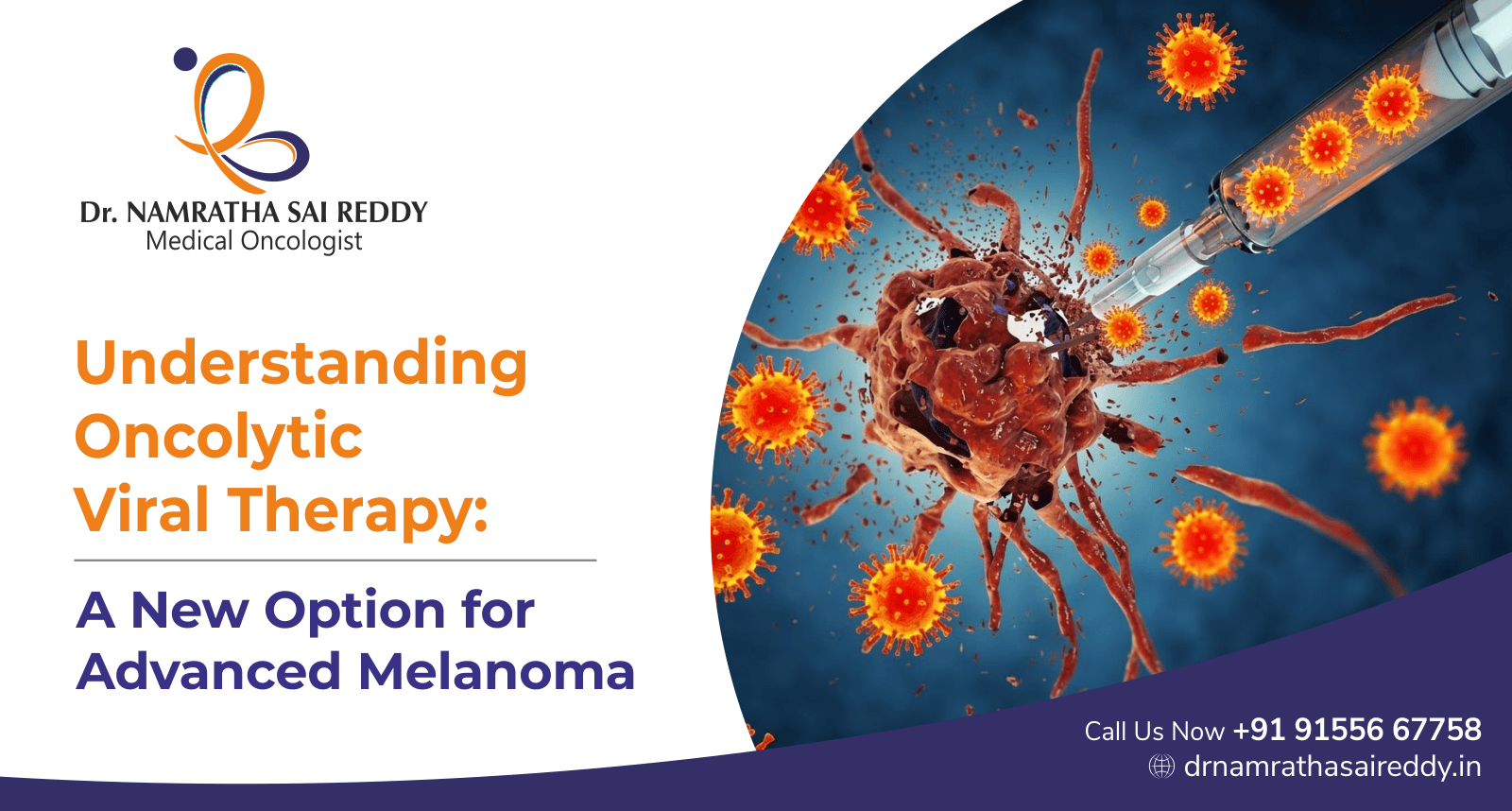
If standard immunotherapy has stopped working for advanced melanoma, a new class of treatment called oncolytic viral therapy is now available. On August 6, 2026, the FDA granted accelerated approval to vusolimogene oderparepvec-wtpg (Tudriqev), a genetically modified oncolytic virus, in combination with nivolumab for adults with unresectable advanced cutaneous melanoma that has progressed on a prior PD-1 blocking immunotherapy regimen. This article explains what oncolytic viral therapy is, how it works against melanoma, and who may be eligible. For related reading, see our articles on personalised mRNA cancer vaccines and the immune-based treatments that followed COVID-19 research andwhat survivorship care looks like once cancer is in remission.
Key Takeaways
- Oncolytic viral therapy uses a genetically engineered virus to infect and destroy cancer cells directly while activating the immune system against the tumor.
- Vusolimogene oderparepvec (Tudriqev), combined with nivolumab, received FDA accelerated approval on August 6, 2026 for advanced melanoma that has progressed after anti-PD-1 immunotherapy.
- In the pivotal IGNYTE trial, the combination achieved an objective response rate of 24.2%, with responses lasting a median of about 14 months.
- The therapy is a genetically modified herpes simplex virus (HSV-1), engineered to replicate inside tumor cells and cause them to burst, releasing more virus to infect nearby cancer cells.
- It is given as a series of intratumoral injections directly into melanoma lesions, alongside intravenous nivolumab, over an eight dose treatment course.
- This treatment is intended for melanoma that has already progressed on PD-1 based immunotherapy, not as an initial treatment.
What Is Oncolytic Viral Therapy and How Does It Work Against Cancer?
Oncolytic viral therapy is a form of cancer treatment that uses a modified virus, engineered so it can infect and multiply inside cancer cells while sparing healthy tissue. Cancer cells often have weakened antiviral defenses compared to normal cells, which allows the virus to selectively take hold inside the tumor. Once inside, the virus replicates until the cancer cell breaks open, or lyses, releasing new virus particles that go on to infect neighboring tumor cells. This process also exposes the immune system to tumor material and inflammatory signals it wouldn’t otherwise see, effectively turning the injected tumor into a trigger for a broader immune response against melanoma elsewhere in the body, even in lesions that weren’t directly injected. According to the American Association for Cancer Research, melanoma is the fifth most common cancer in the United States, and in 2026 alone, an estimated 112,000 people were expected to be diagnosed with it in the country.
How Does Vusolimogene Oderparepvec (Tudriqev) Treat Advanced Melanoma?
Tudriqev is built from a genetically modified herpes simplex virus, type 1 (HSV-1), engineered to remove the genes responsible for causing disease in humans while adding genes that boost its cancer-fighting ability. It carries a fusogenic protein derived from gibbon ape leukemia virus, which helps cancer cells fuse together and die more efficiently, along with a gene for GM-CSF, a protein that helps recruit and activate immune cells at the tumor site.
- The virus is injected directly into melanoma lesions, prioritizing the largest or fastest growing tumors when multiple lesions are present.
- Treatment is given every two weeks for eight consecutive doses, alongside nivolumab given intravenously starting at week three.
- The combination is designed to work by attacking the injected tumor directly while also stimulating the immune system to recognize and attack melanoma throughout the body.
Full prescribing and dosing details are available from the FDA’s official approval announcement and from Replimune’s own announcement of the approval.
Can Oncolytic Viral Therapy Replace Immunotherapy for Melanoma?
Not exactly. Oncolytic viral therapy for melanoma is currently approved to be used together with nivolumab, an existing immunotherapy drug, not as a replacement for it. The approval specifically covers patients whose melanoma has already progressed after a course of anti-PD-1 based immunotherapy, so it functions as a next step rather than a substitute for first line immunotherapy.
What Does the Clinical Trial Evidence Show for This Melanoma Treatment?
The approval is based on results from the IGNYTE trial, an open label, multiregional study that enrolled 140 adult patients with Stage IIIB, IIIC, or IV unresectable advanced melanoma who had progressed after at least eight consecutive weeks of prior anti-PD-1 based therapy.
- Among the 91 evaluable patients with at least one non-injected lesion, the combination achieved an objective response rate of 24.2%.
- The median duration of response was 14.1 months, meaning responses tended to last well over a year in patients who responded.
- The trial population reflected a difficult to treat group: 80% had stage 4 disease, and 54% had PD-L1 negative tumors, a biomarker status usually associated with weaker response to immunotherapy alone.
- Treatment was generally well tolerated, with mostly mild to moderate side effects and no grade 4 or 5 adverse events considered common; serious adverse reactions occurred in about 35% of patients, as reported by BioPharm International.
Does a 24% Response Rate Mean Most Patients Won’t Benefit?
Not quite, and this is an important nuance. A 24.2% objective response rate means roughly one in four patients had a measurable shrinkage of their tumors, but this doesn’t capture the full picture of clinical benefit, since some patients may experience disease stabilization without a formal “response” by trial criteria. For a patient population that has already progressed on immunotherapy and previously had very limited options, a durable response lasting over a year in a meaningful subset of patients represents real progress.
What Side Effects and Precautions Are Associated With Oncolytic Viral Therapy?
Because Tudriqev is a modified live virus, it comes with specific safety considerations beyond those of typical cancer drugs.
- Report any signs of infection, fever, or flu like symptoms after treatment, since the therapy involves a modified virus and immune activation.
- Because the treatment contains live virus material, patients and caregivers should follow specific handling and hygiene precautions provided by the treatment center, especially around injection sites.
- Pregnant patients or those trying to conceive should discuss this treatment carefully with their oncologist given its mechanism as a live viral therapy.
- Most side effects reported in trials were mild to moderate, but any new or worsening symptoms should be reported promptly rather than waiting for the next scheduled visit.
For patient-focused guidance on preparing for treatment and what to expect, the AIM at Melanoma Foundation offers additional resources for patients and caregivers navigating this new treatment option.
What Are the Early Signs of Melanoma to Watch For?
Recognizing melanoma early gives patients access to more treatment options, including surgery, before the disease becomes advanced or unresectable.
- A new mole or a change in an existing mole’s size, shape, or color.
- A mole with an irregular or asymmetric border.
- A spot on the skin that itches, bleeds, or won’t heal.
- A dark streak under a fingernail or toenail that wasn’t caused by injury.
- A new growth that looks different from other spots on your skin, sometimes described as the “ugly duckling” sign.
How Is Advanced Melanoma Diagnosed and Monitored During Treatment?
Diagnosing and staging advanced melanoma, and tracking how it responds to treatments like oncolytic viral therapy, typically involves several steps.
- Skin examination and dermoscopy to evaluate suspicious lesions.
- Biopsy to confirm melanoma and assess how deep it has grown.
- Imaging, such as CT or PET-CT scans, to check whether melanoma has spread to lymph nodes or other organs.
- PD-L1 and biomarker testing, which helps predict how a tumor may respond to immunotherapy based approaches.
- Regular clinical assessment of injected and non-injected lesions during oncolytic viral therapy, to track both local and overall response.
What to avoid: Don’t delay evaluation of a changing mole or skin lesion, since earlier stage melanoma has far more treatment options than advanced disease. Don’t assume that progression on one immunotherapy regimen means no further treatment options exist. Newer approaches like oncolytic viral therapy are specifically designed for this situation.
Is Oncolytic Viral Therapy the Right Option for You or a Loved One?
Oncolytic viral therapy represents a genuinely new treatment category for advanced melanoma, but it isn’t the right fit for every patient. Eligibility depends on prior treatment history, the location and number of melanoma lesions, and overall health. This is a decision best made together with a medical oncologist experienced in melanoma care.
Consult Dr. Namratha Sai Reddy’s clinic if you or a loved one is experiencing:
- A changing or suspicious mole or skin lesion
- Advanced melanoma that has progressed after immunotherapy
- Questions about whether oncolytic viral therapy applies to your case
- A need for a second opinion on melanoma treatment options
Call +91 91556 67758 or book an appointment online to schedule a consultation.
When Should Melanoma Patients Seek Urgent Medical Care?
Certain symptoms during melanoma treatment need prompt medical attention rather than waiting for a routine follow up.
- High fever or chills, especially after an injection of oncolytic viral therapy
- Rapid swelling, spreading redness, or severe pain at an injection site
- New shortness of breath or chest pain
- Sudden neurological symptoms such as confusion, severe headache, or weakness on one side of the body
- Any severe or rapidly worsening reaction after treatment
If any of these occur, go to the nearest emergency department or call emergency services right away.
Medically Reviewed & Approved By
Dr. B. Namratha Sai Reddy Medical Oncologist, American Oncology Institute, Nallagandla, Hyderabad Dr. Namratha leads the Medical Oncology Department at American Oncology Institute, Nallagandla.
Medical References
- U.S. Food and Drug Administration. FDA Approves New Engineered Viral Immunotherapy for Patients with Treatment-Resistant Advanced Melanoma. Published August 6, 2026.
- Replimune Group, Inc. Replimune Announces FDA Accelerated Approval of TUDRIQEV in Combination with Nivolumab for Unresectable Advanced Cutaneous Melanoma. Press release, August 6, 2026.
- American Association for Cancer Research (AACR). Oncolytic Viral Therapy Combination Approved for Advanced Melanoma. August 2026.
- Oncology Nursing Society. FDA Grants Accelerated Approval to Vusolimogene Oderparepvec-Wtpg in Combination With Nivolumab for Melanoma. August 2026.
- BioPharm International. FDA Grants Accelerated Approval to Replimune’s Tudriqev Plus Nivolumab for Advanced Melanoma. August 2026.
- AIM at Melanoma Foundation. FDA Approves New Engineered Viral Immunotherapy for Patients with Treatment-Resistant Advanced Melanoma. August 2026.
Frequently Asked Questions
1. What is oncolytic viral therapy for melanoma?
It’s a cancer treatment that uses a genetically modified virus, injected directly into tumors, to infect and destroy cancer cells while triggering an immune response against melanoma elsewhere in the body.
2. What is Tudriqev and how is it used for melanoma?
Tudriqev (vusolimogene oderparepvec-wtpg) is a genetically modified herpes simplex virus based oncolytic therapy, approved in combination with nivolumab for adults with advanced melanoma that has progressed on prior anti-PD-1 immunotherapy.
3. Who is eligible for oncolytic viral therapy for melanoma?
Adults with unresectable advanced cutaneous melanoma who have experienced disease progression after at least eight weeks of anti-PD-1 based immunotherapy.
4. How effective is oncolytic viral therapy for advanced melanoma?
In the pivotal IGNYTE trial, the combination achieved a 24.2% objective response rate, with responses lasting a median of about 14 months in patients who responded.
5. How is oncolytic viral therapy given?
It’s given as a series of intratumoral injections directly into melanoma lesions every two weeks for eight doses, combined with intravenous nivolumab starting at week three.
6. Is oncolytic viral therapy the same as immunotherapy?
Not exactly. It works by directly destroying cancer cells with a modified virus while also stimulating the immune system, and in this approval it’s used together with an existing immunotherapy drug, not in place of it.
7. What side effects are associated with oncolytic viral therapy for melanoma?
Most reported side effects were mild to moderate, though patients should watch for fever, flu like symptoms, or reactions at the injection site and report them to their care team.
8. Can oncolytic viral therapy treat melanoma that hasn’t spread to other organs?
This approval covers unresectable advanced cutaneous melanoma that has already progressed on immunotherapy, so its use is specifically defined for that setting rather than for early stage, surgically removable melanoma.
9. Is oncolytic viral therapy a cure for advanced melanoma?
No. It’s designed to shrink tumors and extend response duration in patients who have already progressed on standard immunotherapy, not as a guaranteed cure.
10. When should someone with melanoma seek urgent medical care during this treatment?
High fever, severe or spreading reactions at an injection site, new breathing difficulty, or sudden neurological symptoms all warrant immediate medical attention.
This article is for informational purposes and does not replace professional medical advice. Always consult your oncologist before making decisions about your diagnosis or treatment plan.