

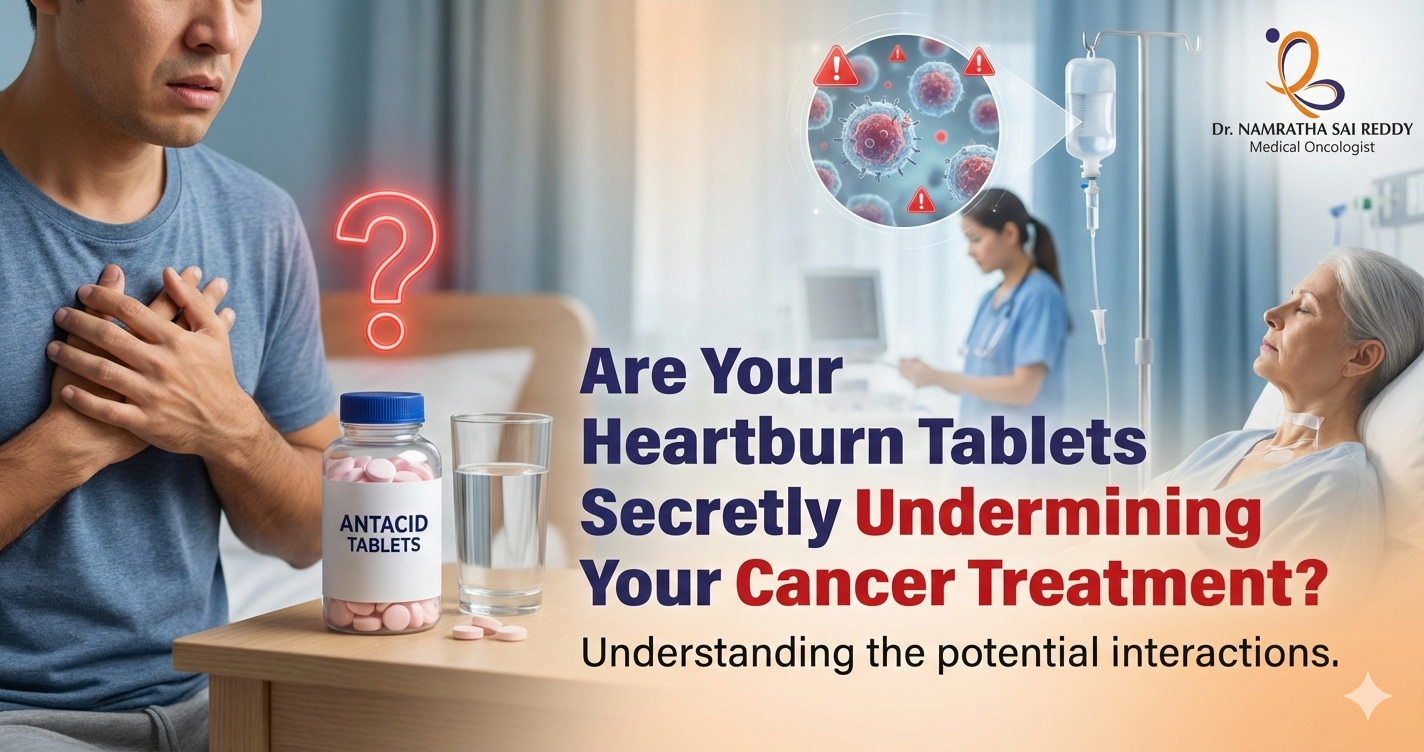
Yes, common heartburn tablets called proton pump inhibitors (PPIs) can significantly reduce the effectiveness of cancer immunotherapy and targeted drugs, and multiple large clinical studies show PPI users face up to a 37% worse survival outcome compared to cancer patients who do not take them.
Key Takeaways:
- PPIs may reduce the effectiveness of immunotherapy, linked to a 37% worse survival rate and an 18% higher mortality rate, likely due to gut microbiome disruption that weakens the immune response.
- PPIs can reduce the absorption of oral cancer drugs by 40–70%; erlotinib loses 61% of its peak concentration, and gefitinib up to 70%, thereby reducing treatment effectiveness.
- Nearly 30% of cancer patients use PPIs, often without informing their oncologist, as these are OTC drugs mistakenly considered harmless.
- H2 blockers like famotidine are safer alternatives; they have milder acid suppression, shorter action, and no proven negative impact on immunotherapy outcomes.
- Always inform your oncologist before using PPIs; never stop suddenly, but discuss interactions and ask if safer alternatives like H2 blockers are appropriate.
Every day, millions of people reach for a proton pump inhibitor (PPI) without a second thought. Omeprazole, lansoprazole, pantoprazole, and esomeprazole. These tablets are so routine that they sit on supermarket shelves next to vitamins.
In cancer care, they are handed out almost reflexively to manage the stomach side effects of chemotherapy and targeted drugs. But a rapidly growing body of clinical evidence is asking a deeply uncomfortable question: could gas tablets be quietly sabotaging the cancer treatments they are prescribed alongside?
The answer, according to multiple large peer-reviewed studies, is yes, and the effect is far from trivial.
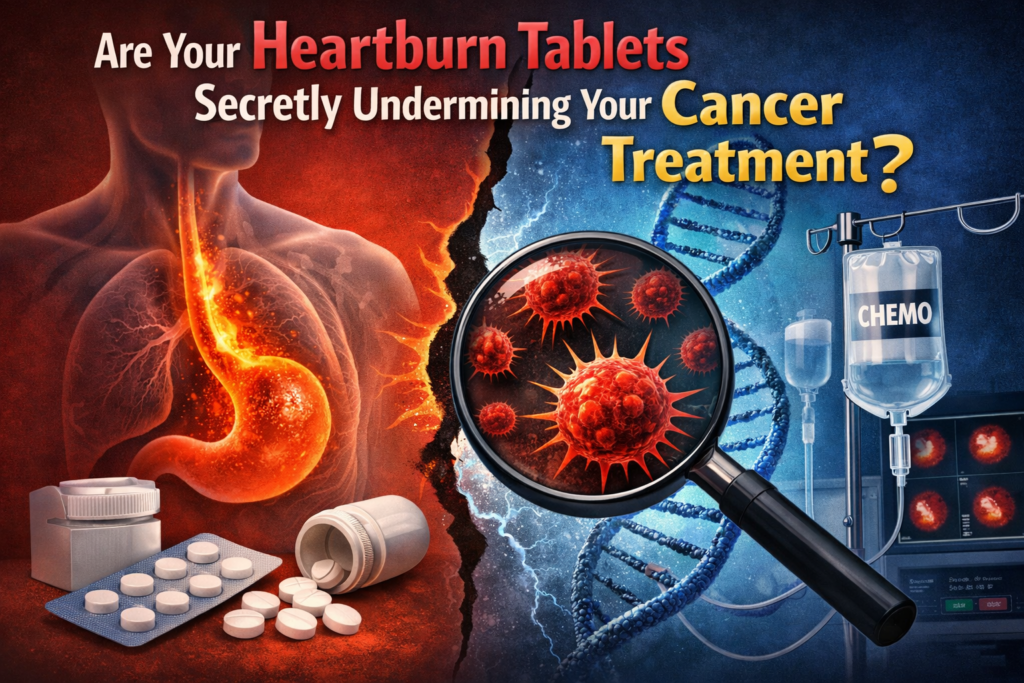
What Are PPIs and How Common Are They in Cancer Patients?
Proton pump inhibitors work by blocking acid-producing pumps in the stomach lining, reducing gastric acid output by up to 99% at standard doses. They are prescribed to patients to control heartburn, acid reflux, nausea, and gastrointestinal side effects of immunotherapy. The most widely used include:
• Omeprazole (Prilosec / Losec)
• Lansoprazole (Prevacid)
• Pantoprazole (Protonix)
• Esomeprazole (Nexium)
• Rabeprazole (Aciphex)
Many of these are available without a prescription, which is precisely why they so often go unmentioned in oncology consultations. Patients simply do not realise that a heartburn tablet bought at a pharmacy could interact with their cancer drug.
The scale of use is significant. Research confirms that approximately 30% of all cancer patients take PPIs, often for extended periods and frequently during active treatment windows. Some studies put the figure even higher:a large US study drawing on SEER-Medicare data found acid-reducing agent use as high as 55% across all cancer types in national databases.
How PPIs Weaken Cancer Immunotherapy
Immune checkpoint inhibitors (ICIs), drugs like pembrolizumab (Keytruda), nivolumab (Opdivo), and atezolizumab (Tecentriq) are among the most significant advances in cancer treatment in decades. They work by releasing the immune system’s natural brakes, allowing T-cells to identify and destroy tumour cells.
But this process depends critically on a healthy, diverse gut microbiome to prime and sustain that immune response. PPIs weaken the gut microbiome. By eliminating stomach acid, they allow bacteria that would normally be killed in the stomach to colonise the gut.
This suppresses beneficial strains like Bifidobacterium and Lactobacillus that are strongly associated with positive immunotherapy outcomes. The result is a blunted immune response at the exact moment treatment is trying to harness it.
The clinical data make for sobering reading:
• A 2023 meta-analysis published in Frontiers in Immunology analysed cancer patients receiving immune checkpoint inhibitors and found PPI users had a hazard ratio of 1.37 for overall survival (95% CI 1.23-1.52) and 1.28 for progression-free survival (95% CI 1.15-1.42), meaning they were 37% more likely to die and 28% more likely to see their cancer progress.
• A 2025 systematic review and meta-analysis published in PubMed, drawing on 10,420 individuals, found PPI use linked to an 18% increased mortality risk (HR = 1.18; 95% CI: 1.11-1.25) and a 12% higher risk of disease progression in solid tumour patients receiving ICIs.
• A meta-analysis in the Journal of Personalised Medicine focused on 1,015 bladder cancer patients receiving immunotherapy and found a hazard ratio of 1.55 for overall survival and 1.43 for progression-free survival, a 55% worse survival rate in PPI users.
• Researchers at Strasbourg University Hospital confirmed the association held not just in lung and bladder cancer, but across multiple tumour types, and across both anti-PD-1 and anti-PD-L1 agents. Crucially, patients in control arms not receiving immunotherapy did not show the same association, strongly implicating the microbiome mechanism specifically.
A November 2023 study, published in PubMed, put it plainly: “PPI users showed significantly lower progression-free survival and overall survival in the chronic use, recent use, and concomitant use groups.” The timing of PPI use relative to treatment also matters: PPI use during the first 30 days of immunotherapy appears to be particularly damaging, coinciding with the critical window in which the immune system is being activated.
Not All Acid Suppressants Are Equally Harmful
One of the most clinically useful findings in recent research is that histamine-2 receptor antagonists (H2RAs), a different and milder class of acid suppressant including famotidine (Pepcid), do not appear to cause the same degree of harm. In bladder cancer studies, H2RA use was not associated with worse survival outcomes, unlike PPIs. In TKI studies, H2RAs raise stomach pH less dramatically and for a shorter duration, which means drug absorption is less severely impacted.
Where a PPI cannot be avoided, pharmacokinetic research suggests that taking the TKI two hours before the PPI can help preserve absorption by exploiting the pre-dose window of lower pH. Some studies have also shown that consuming the TKI with an acidic drink such as cola can enhance erlotinib bioavailability by approximately 40% in patients simultaneously taking esomeprazole. These are strategies to explore with your oncologist, not to self-manage.
Long-Term PPI Use and Cancer Risk
The concern does not stop at treatment interference. Long-term PPI use has itself been associated with increased cancer risk in observational research. A meta-analysis of multiple observational studies found that PPI use exceeding three months was significantly associated with elevated cancer risk through the following mechanisms:
• Gut microbiome disruption, reducing immune surveillance of early cancer cells
• Malabsorption of Vitamin B12, calcium, magnesium, and iron, all linked to increased cancer risk at chronically low levels
• Hypergastrinemia: elevated gastrin levels caused by long-term acid suppression, which can stimulate abnormal cell proliferation in the stomach lining
• Multiple studies report a dose-duration relationship for gastric cancer risk, the longer the duration of PPI use, the greater the risk, with some analyses showing the risk more than doubling with long-term use
What Should Cancer Patients Do?
The evidence is clear enough that oncologists and clinical pharmacists are now actively calling for medication reviews in cancer patients taking PPIs. If you or someone you care for is undergoing cancer treatment, here is what the research supports:
1. Disclose every medication to your oncologist, including over-the-counter antacids and supplements. PPIs are frequently self-prescribed and go unreported at oncology appointments.
2. Ask specifically about interactions. Ask whether any acid suppressant you take interacts with your cancer drug. For erlotinib, gefitinib, dasatinib, and palbociclib in particular, this question is critical.
3. Ask about H2RA alternatives. Famotidine and similar H2 receptor antagonists may provide adequate acid control with significantly lower risk of interfering with your treatment.
4. Do not stop PPIs abruptly. Abrupt withdrawal can cause acid rebound and worsen symptoms. Any change should be supervised and tapered under medical guidance.
5. Ask about timing. If a PPI cannot be avoided, your oncologist or clinical pharmacist may be able to structure medication timing to minimise the interaction window.
6. Raise it at every appointment. Medication reconciliation across multiple providers is a known gap in cancer care. Do not assume your oncologist and GP are communicating about your full medication list.
The Bottom Line
A tablet that almost every cancer patient has access to without a prescription, and that is routinely given to manage the side effects of cancer treatment itself, is emerging as a meaningful contributor to worse survival outcomes in multiple cancer types.
The mechanism is well-understood, the statistics are consistent across independent large-scale studies, and the solution is achievable: better medication review, better communication between care teams, and greater awareness among patients.
If you are going through cancer treatment and taking any form of acid suppressant, that conversation with your oncologist is worth having today.
Medical Disclaimer: This article is for informational purposes only and does not constitute medical advice. All statistics are drawn from peer-reviewed sources linked throughout. Always consult a qualified healthcare professional before making any changes to your medication.