

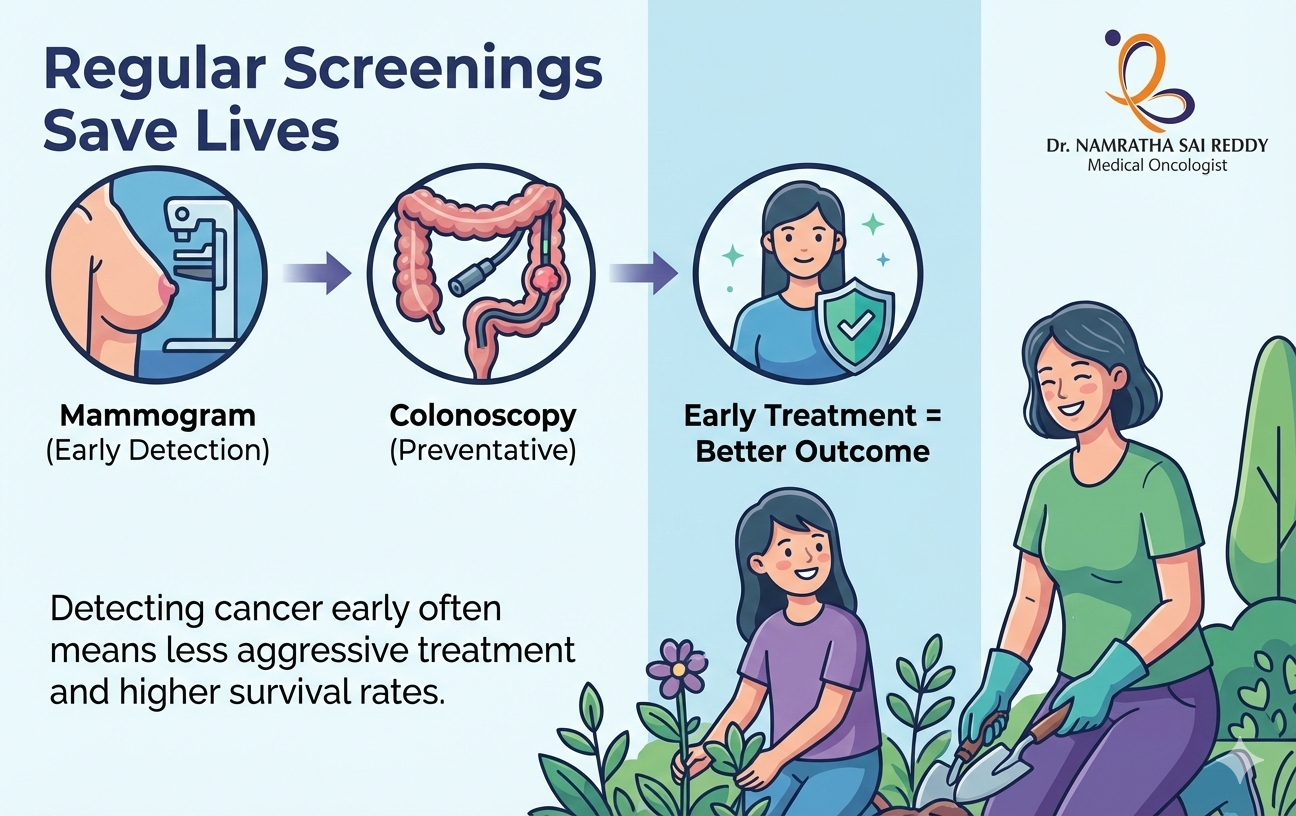
Cancer rarely begins with pain or visible warning signs. In many people, it develops silently over the years, spreading before symptoms appear. This quiet progression is exactly why preventive cancer screening is one of the most powerful tools in modern healthcare.
Regular screening allows doctors to detect cancer early or stop it before it starts. It plays a central role in cancer screening and prevention, reducing deaths and improving long‑term outcomes. When screening becomes routine, cancer shifts from a crisis to a condition that can often be managed or cured.
Cancer Screening: What It Really Means
Cancer screening refers to medical tests performed on people who feel healthy and have no symptoms. The purpose of a screening examination is to identify early cancer, precancerous changes, or risk indicators that need closer follow‑up. These tests are designed to raise an alert, not to deliver a final diagnosis.
Screening works because cancer usually develops in stages. Early cellular changes may not cause symptoms, but they can still be detected through imaging, lab tests, or physical exams. This is the foundation of screening and early detection of cancer.
It is important to understand that screening is not perfect. Some tests may miss disease, while others may flag harmless changes. Still, when applied correctly and repeated on schedule, screening dramatically improves survival and supports the primary prevention of cancer.
Key goals of cancer screening include:
- Detecting cancer before symptoms appear
- Identifying precancerous changes early
- Reducing cancer‑related deaths
- Supporting long‑term cancer screening and prevention strategies
Cancer Screening and Prevention: How Screening Stops Cancer Before It Starts
Many people assume screening only finds cancer. In reality, it often prevents cancer entirely. Several cancers begin as abnormal but non‑cancerous changes that can be treated or removed early.
This is where cancer screening and prevention intersect. For example, a colonoscopy removes polyps before they turn cancerous. Cervical screening detects abnormal cells long before cancer develops. These actions represent true primary prevention of cancer.
Screening also opens the door to risk reduction. When tests reveal elevated risk, doctors can guide lifestyle changes, monitor closely, or begin preventive treatment. This proactive approach lowers future cancer burden at both the individual and population levels.
How screening contributes to prevention:
- Removes precancerous growths
- Detects high‑risk infections early
- Identifies genetic or lifestyle risk factors
- Encourages ongoing screening exam adherence
Why Early Detection of Cancer Saves Lives
Cancer outcomes depend heavily on stage at diagnosis. Early‑stage cancers are usually localised, smaller, and easier to treat. This makes early detection of cancer the single most important factor in survival.
An early cancer detection test often allows simpler treatment. Surgery may replace chemotherapy. Recovery is faster, and long‑term side effects are reduced. Patients also experience less emotional and financial strain.
This is why public health systems prioritise screening and early detection of cancer. The earlier cancer is found, the greater the chance of a cure and long‑term survival.
Benefits of early detection include:
- Higher cure rates
- Less aggressive treatment
- Lower healthcare costs
- Better quality of life
When Should You Get Screened?
There is no single age that fits everyone. Screening schedules depend on age, gender, family history, and lifestyle risks. A personalised cancer check-up test plan is always more effective than a generic one.
Some screenings begin in early adulthood, while others start later. High‑risk individuals may need earlier or more frequent tests. Your healthcare provider evaluates these factors to recommend the right screening exam at the right time.
Factors that influence screening timing:
- Age and biological sex
- Family history of cancer
- Genetic risk
- Smoking, alcohol use, or obesity
Screening for Common Cancer
Breast Cancer Screening (Mammograms)
Mammograms are one of the most proven cancer screening tools. They detect breast cancer before lumps can be felt, often years earlier. This makes them essential among cancer screening tests for females.
Regular mammography significantly lowers breast cancer mortality. Early detection allows for breast‑conserving treatment and improved survival. For women at higher risk, additional imaging may be recommended.
Cervical Cancer Screening
Cervical screening does more than detect cancer. It prevents it. Pap smears and HPV tests identify abnormal cells that may later become cancerous.
This form of screening represents one of the strongest examples of primary prevention of cancer. When done regularly, cervical cancer becomes largely preventable.
Colon Cancer Screening
Colon cancer screening both detects and prevents disease. Colonoscopy allows doctors to remove polyps before they turn malignant.
Other methods, such as stool‑based tests, also play a role in screening for common cancers, especially when a colonoscopy is not feasible.
Other Essential Cancer Screening Tests
Lung Cancer Screening
Low-dose CT scans are recommended for high-risk individuals with a smoking history. These scans support early detection of cancer when lung cancer is still treatable.
Prostate Cancer Screening
PSA blood tests may help detect prostate cancer early in select age groups, depending on risk.
Skin Cancer Screening
Full-body skin exams help identify melanoma and other skin cancers early, even before symptoms appear.
Together, these form a comprehensive approach to screening for common cancers across populations.
Can We Detect Cancer Through Blood Tests?
Blood tests can sometimes detect cancer markers or genetic changes. They may also help monitor existing cancer.
New multi‑cancer blood tests show promise, but they are not replacements for established screening. At present, they complement rather than replace standard cancer detection methods.
Blood tests are best viewed as part of a broader cancer screening and prevention strategy, not a standalone solution.
Understanding Screening Results and Follow-Up
A screening result is not a diagnosis.
- Abnormal result: More tests are needed
- Normal result: Continue routine screening
Cancer grows slowly. That’s why repeating tests at recommended intervals is essential for sustained cancer detection.
How to Detect Cancer at an Early Stage: What You Can Do
If you wonder how to detect cancer at early stage, consistency matters most. Following recommended schedules is more effective than one‑time testing.
Steps you can take:
- Follow age‑appropriate screening guidelines
- Choose the right cancer check up test
- Share family history honestly
- Attend all follow‑up appointments
This approach strengthens screening and early detection of cancer over time.
Questions Everyone Should Ask Their Doctor
- Which screening exam do I need right now?
- How often should I repeat it?
- Are there tests I can do at home?
- Do I qualify for additional screening due to risk factors?
These conversations personalise your cancer screening and prevention plan.
Screening Is an Investment in Life
Cancer screening is not about waiting for disease. It is about acting before cancer takes control. Through preventive cancer screening, people gain time, options, and often a cure.
Regular screening transforms outcomes by enabling early detection of cancer, reducing treatment intensity, and improving survival. It also strengthens long‑term cancer screening and prevention strategies at both personal and public health levels.
Mammograms, colonoscopy, cervical screening, and emerging tests all work together to protect health. When screening becomes routine, cancer becomes far less deadly. Early action saves lives, and screening makes early action possible.
Frequently Asked Questions (FAQs)
1. Are cancer screenings painful?
Most screenings are quick and cause minimal discomfort.
2. How often should I get screened?
Frequency depends on age, risk, and test type.
3. Can screening prevent cancer?
Yes, some screenings directly prevent cancer.
4. Are blood tests enough for cancer detection?
No, they complement but do not replace standard screening.
5. What if my screening result is abnormal?
Further testing is needed, not immediate treatment.
6. Do healthy people really need screening?
Yes, screening targets people without symptoms.
7. Which cancers are most preventable through screening?
Cervical and colon cancers are highly preventable.