

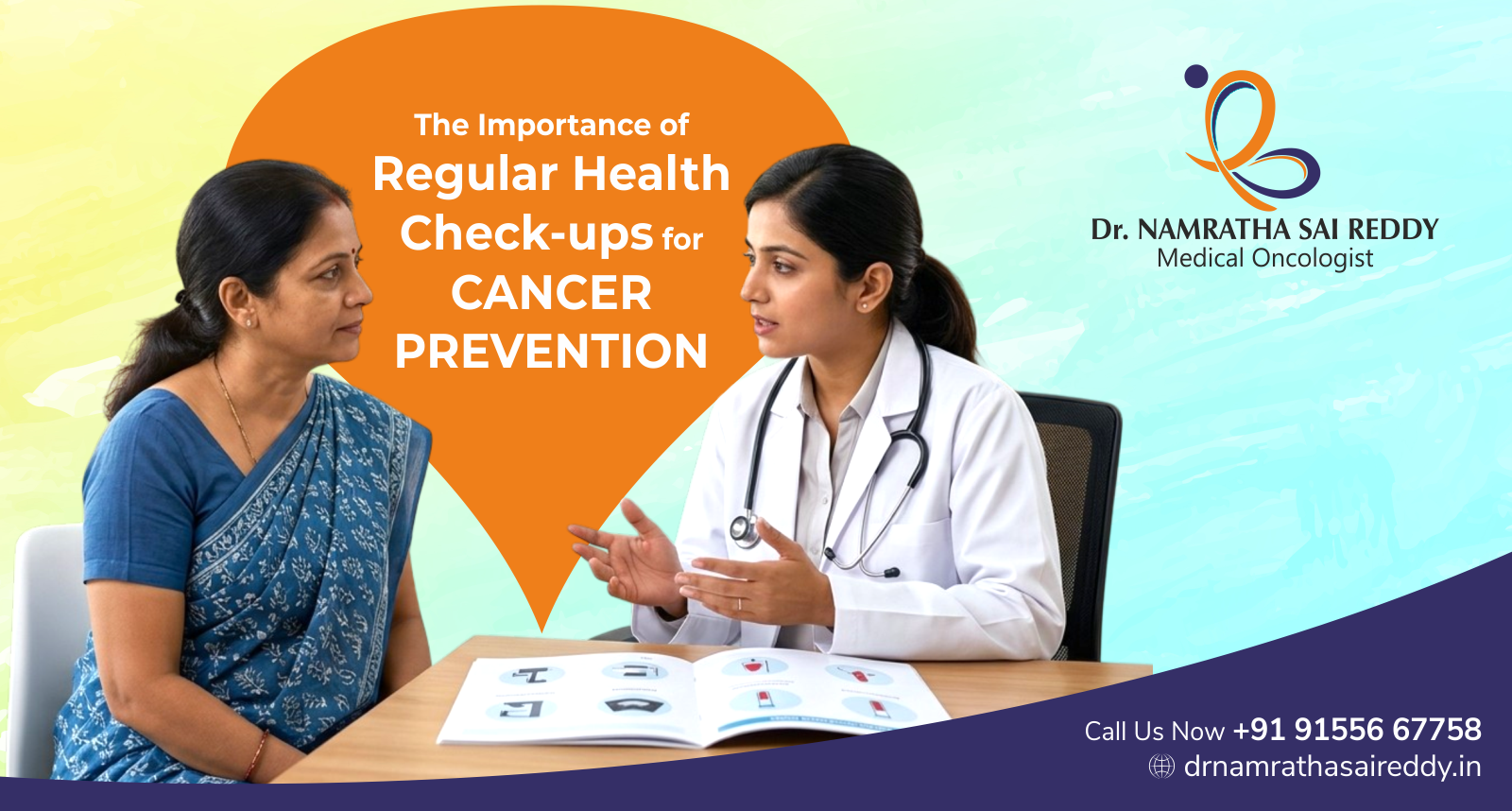
Regular health check-ups play a crucial role in cancer prevention by identifying risk factors, detecting precancerous conditions, and diagnosing cancer at an early stage—often before symptoms develop. Early detection improves treatment success, expands treatment options, and can significantly reduce cancer-related complications and mortality.
Key Takeaways
- Many cancers develop silently without noticeable symptoms.
- Routine health check-ups help detect cancer earlier.
- Screening tests can identify precancerous changes before cancer develops.
- Screening recommendations vary based on age, sex, family history, and lifestyle.
- Early diagnosis often leads to better outcomes and less aggressive treatment.
Cancer Prevention at a Glance
- Purpose: Detect cancer or precancerous changes early
- Who Should Be Screened: Adults based on age, family history, lifestyle, and medical history
- Common Screening Tests: Mammogram, Pap smear, HPV test, colonoscopy, low-dose CT scan (selected individuals), oral examination
- Benefits: Early diagnosis, improved survival, broader treatment options
- Frequency: Based on individual risk and national screening recommendations
Latest Statistics
- According to the World Health Organization (WHO), cancer accounts for nearly 10 million deaths every year worldwide.
- Around 30–50% of cancers are considered preventable by reducing exposure to known risk factors such as tobacco use, unhealthy diet, obesity, physical inactivity, alcohol consumption, and certain infections.
- Screening programmes for breast, cervical, colorectal, and oral cancers have significantly improved early detection and treatment outcomes.
- Early-stage cancers generally have much higher survival rates than cancers diagnosed after they have spread.
Introduction
Cancer remains one of the leading causes of illness and death worldwide. While advances in diagnosis and treatment have improved survival rates, one of the most effective ways to reduce the burden of cancer is through prevention and early detection.
Unfortunately, many cancers develop quietly. In their early stages, they may not cause pain, discomfort, or any obvious symptoms. By the time warning signs appear, the disease may already be more advanced, requiring more intensive treatment.
This is why regular health check-ups are so important. They allow healthcare professionals to detect abnormalities before symptoms develop, identify individuals at higher risk, and recommend appropriate screening tests based on age, lifestyle, and family history.
Rather than waiting for illness to appear, routine check-ups encourage a proactive approach to health. They help detect disease earlier, support healthier lifestyle choices, and improve the chances of successful treatment when cancer is diagnosed.
What Are Regular Health Check-ups?
A regular health check-up is a comprehensive medical evaluation designed to assess your overall health, identify risk factors, and detect diseases at an early stage.
A preventive health check-up may include:
- Review of medical history
- Family history assessment
- Physical examination
- Blood pressure measurement
- Blood sugar testing
- Cholesterol testing
- Body weight and BMI assessment
- Lifestyle evaluation
- Cancer screening tests when appropriate
The exact investigations vary depending on your age, sex, medical history, and individual risk factors.
Why Are Regular Health Check-ups Important for Cancer Prevention?
Health check-ups offer much more than reassurance. They help detect diseases before symptoms appear and create opportunities for early intervention.
Benefits include:
- Detecting cancer at an early stage
- Identifying precancerous conditions
- Recognising inherited or lifestyle-related cancer risks
- Monitoring chronic diseases that may increase cancer risk
- Encouraging healthier lifestyle habits
- Providing personalised screening recommendations
Routine health assessments shift healthcare from treating disease to preventing it whenever possible.
Can Regular Health Check-ups Prevent Cancer?
Health check-ups do not directly prevent every type of cancer, but they can reduce the likelihood of advanced disease by identifying abnormal changes early.
They contribute to cancer prevention by:
- Detecting precancerous lesions that can be treated
- Identifying high-risk individuals
- Encouraging tobacco cessation
- Supporting healthy weight management
- Promoting vaccinations such as HPV and Hepatitis B where appropriate
- Recommending age-appropriate screening
For example:
- Colonoscopy can identify and remove precancerous polyps before they become colorectal cancer.
- Cervical screening detects abnormal cells that can be treated before cancer develops.
- Regular oral examinations may detect suspicious lesions early in people who use tobacco.
Benefits of Early Cancer Detection
Early diagnosis has a major impact on treatment success and quality of life.
Better Treatment Outcomes
Many cancers respond more successfully to treatment when diagnosed before they spread.
More Treatment Choices
Patients diagnosed at an early stage often have a wider range of treatment options, including less invasive procedures.
Less Aggressive Treatment
Early-stage cancers may require less extensive surgery, shorter treatment duration, or fewer combined therapies.
Improved Quality of Life
Treating cancer before it becomes advanced may preserve organ function and reduce long-term complications.
Better Survival Rates
Screening programmes have significantly improved survival for several cancers through earlier diagnosis.
Common Cancer Screening Tests
Breast Cancer Screening
Women may be advised to undergo:
- Mammography
- Clinical breast examination
- Breast awareness education
The recommended starting age and screening interval depend on individual risk factors and local guidelines.
Cervical Cancer Screening
Regular screening helps detect abnormal cervical cells before they progress to cancer.
Recommended tests include:
- Pap smear
- HPV testing
Colorectal Cancer Screening
Screening options include:
- Colonoscopy
- Stool-based tests
- Other approved screening methods
Colonoscopy has the added benefit of removing precancerous polyps during the procedure.
Oral Cancer Screening
Regular oral examinations are especially important for people who:
- Smoke
- Use smokeless tobacco
- Chew betel nut
- Consume excessive alcohol
Persistent mouth ulcers, red or white patches, or unexplained lumps require prompt evaluation.
Lung Cancer Screening
Selected individuals with a significant smoking history may benefit from low-dose CT (LDCT) screening after discussion with their healthcare provider.
Prostate Cancer Screening
Routine screening is not recommended for every man.
Screening decisions should be individualised and may involve:
- Prostate-specific antigen (PSA) blood test
- Digital rectal examination (when appropriate)
Shared decision-making with a healthcare professional is recommended.
Expert Insight
The greatest advantage of regular health check-ups is that they identify disease before symptoms appear. In cancer care, detecting abnormalities at an earlier stage often allows simpler treatment, improved survival, and, in some cases, prevention of cancer altogether.
Who Should Undergo Regular Cancer Screening?
Cancer screening is not the same for everyone. The type of screening and how often it should be performed depends on your age, sex, family history, lifestyle, medical conditions, and individual risk factors.
You may benefit from regular screening if you:
- Are 40 years or older (depending on the cancer type)
- Have a family history of cancer
- Smoke or use smokeless tobacco
- Consume alcohol regularly
- Have obesity or metabolic syndrome
- Have chronic viral infections such as Hepatitis B, Hepatitis C, or HPV
- Have a personal history of precancerous conditions
- Work in environments with exposure to certain chemicals or radiation
- Have inherited genetic conditions that increase cancer risk
Even if you feel healthy, your doctor may recommend screening based on your overall risk profile.
Healthy Lifestyle Habits That Help Reduce Cancer Risk
Although no lifestyle change can completely eliminate the risk of cancer, healthy habits significantly reduce the likelihood of developing many common cancers.
Avoid Tobacco
Tobacco remains the leading preventable cause of cancer.
Smoking and smokeless tobacco increase the risk of:
- Oral cancer
- Lung cancer
- Throat cancer
- Oesophageal cancer
- Bladder cancer
- Pancreatic cancer
- Kidney cancer
Quitting tobacco at any age improves long-term health.
Eat a Balanced Diet
A healthy diet supports the immune system and overall wellbeing.
Include:
- Fresh fruits
- Vegetables
- Whole grains
- Legumes
- Lean protein
- Healthy fats
Limit:
- Processed meat
- Red meat in excess
- Sugary beverages
- Highly processed foods
- Foods high in saturated fat
Stay Physically Active
Regular exercise helps:
- Maintain a healthy weight
- Improve hormone regulation
- Reduce inflammation
- Lower the risk of several cancers
Adults should aim for at least 150 minutes of moderate physical activity each week, unless otherwise advised by their healthcare provider.
Maintain a Healthy Weight
Excess body weight has been linked to an increased risk of several cancers, including:
- Breast cancer
- Colorectal cancer
- Endometrial cancer
- Kidney cancer
- Liver cancer
- Pancreatic cancer
Healthy eating and regular exercise remain the most effective long-term strategies for weight management.
Limit Alcohol Consumption
Excessive alcohol increases the risk of cancers affecting the mouth, throat, oesophagus, liver, breast, and colon.
Reducing or avoiding alcohol can lower these risks.
Stay Up to Date with Vaccinations
Certain infections increase cancer risk.
Vaccinations that help reduce cancer risk include:
- HPV vaccine (to reduce the risk of cervical and certain other HPV-related cancers)
- Hepatitis B vaccine (to reduce the risk of liver cancer)
Warning Signs That Should Never Be Ignored
Routine screening is important, but it should never replace medical evaluation when symptoms develop.
Consult a healthcare professional if you notice:
- Unexplained weight loss
- Persistent fatigue
- A lump anywhere in the body
- A mouth ulcer lasting longer than two weeks
- Blood in the stool or urine
- Persistent cough or hoarseness
- Difficulty swallowing
- Changes in bowel or bladder habits
- Unusual vaginal bleeding
- A mole that changes in size, colour, or shape
- A wound that does not heal
Most of these symptoms are not caused by cancer, but they should always be assessed if they persist.
Myth vs Fact
Myth: If I have no symptoms, I don’t need cancer screening.
Fact: Many cancers develop silently. Screening is designed to detect disease before symptoms appear.
Myth: Only older adults need cancer screening.
Fact: Screening recommendations depend on age, family history, lifestyle, and medical risk factors. Some individuals require earlier screening.
Myth: Cancer screening prevents every cancer.
Fact: Screening cannot prevent all cancers, but it can detect precancerous changes and diagnose cancer earlier when treatment is more effective.
Myth: One normal screening test means I never need another.
Fact: Regular screening should continue at recommended intervals because cancer risk changes over time.
Doctor’s Clinical Pearl
Cancer is often more treatable when detected early. Regular health check-ups provide an opportunity to identify abnormal changes before symptoms develop, allowing timely intervention that may improve survival, reduce treatment intensity, and, in some cases, prevent cancer from developing altogether. Prevention and early detection remain the cornerstones of effective cancer care.
People Also Ask
How often should I have a health check-up for cancer prevention?
The frequency depends on your age, medical history, family history, and individual risk factors. Your healthcare provider can recommend a personalised screening schedule.
Can routine health check-ups detect cancer early?
Yes. Many cancers can be identified at an early stage through appropriate screening tests before symptoms develop, improving treatment outcomes.
Which cancers have recommended screening tests?
Screening programmes are commonly available for breast, cervical, colorectal, lung (for selected high-risk individuals), and oral cancers.
Are cancer screening tests painful?
Most screening tests involve little or no discomfort. Some procedures may cause temporary discomfort, but they are generally well tolerated.
Can young adults get cancer?
Yes. Although cancer becomes more common with age, younger adults can also develop cancer, especially when genetic or lifestyle-related risk factors are present.
Frequently Asked Questions
1. Are annual health check-ups necessary?
Many adults benefit from regular preventive health assessments, although the recommended frequency depends on individual health needs and risk factors.
2. What is the difference between a health check-up and cancer screening?
A health check-up evaluates overall health, while cancer screening specifically looks for cancer or precancerous changes before symptoms appear.
3. Does family history always mean I will develop cancer?
No. Family history increases risk in some cases, but many people with a family history never develop cancer, while some people without a family history do.
4. Can lifestyle changes reduce cancer risk?
Yes. Avoiding tobacco, maintaining a healthy weight, exercising regularly, limiting alcohol, eating a balanced diet, and receiving recommended vaccinations can reduce the risk of several cancers.
5. Is one normal screening test enough?
No. Screening should continue according to recommended intervals because health risks change over time.
6. When should I consult a doctor instead of waiting for my next check-up?
Seek medical advice promptly if you experience persistent symptoms such as unexplained weight loss, prolonged cough, unusual bleeding, difficulty swallowing, or a persistent lump.
7. Can cancer be completely prevented?
Not all cancers can be prevented. However, healthy lifestyle choices, vaccinations, and regular screening can significantly reduce the risk of many cancers.
8. Who should discuss personalised cancer screening with a doctor?
Individuals with a strong family history of cancer, inherited genetic conditions, chronic infections, or other high-risk factors should discuss an individualised screening plan with their healthcare provider.
Conclusion
Regular health check-ups are an essential part of preventive healthcare and play a vital role in reducing the burden of cancer. Although they cannot prevent every cancer, they help identify risk factors, detect precancerous conditions, and diagnose cancer at an earlier stage when treatment is often more successful. Combined with healthy lifestyle choices and recommended screening programmes, routine medical evaluations empower individuals to take a proactive approach to their health. Early detection saves lives—and making regular health check-ups part of your routine is one of the most important steps you can take toward long-term wellbeing.
reference: