

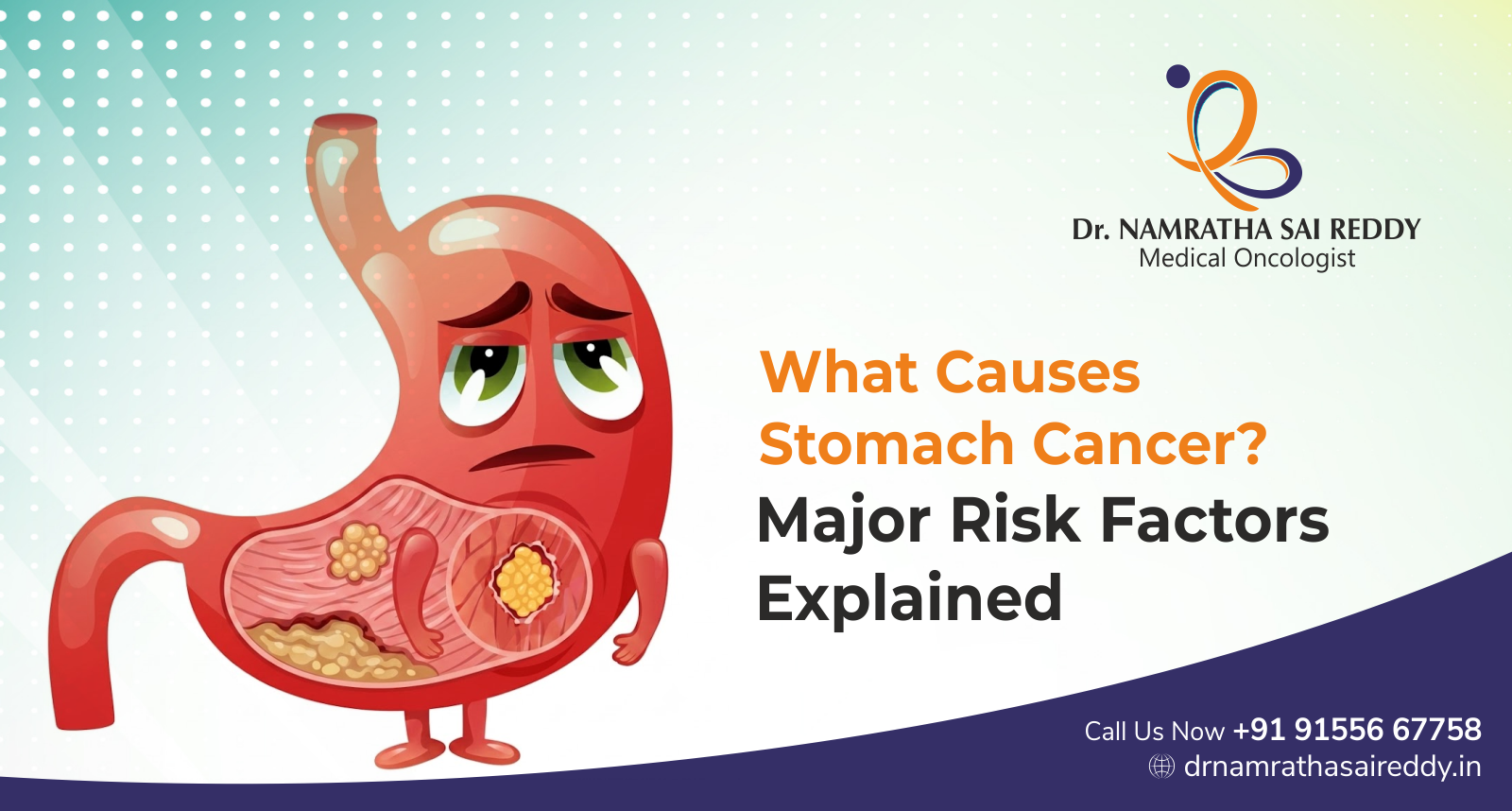
Stomach cancer, also known as gastric cancer, develops when abnormal cells in the stomach lining grow uncontrollably. There is rarely a single cause. Instead, it usually results from a combination of factors such as long-term Helicobacter pylori (H. pylori) infection, smoking, diets high in salty or processed foods, obesity, chronic stomach inflammation, certain inherited genetic conditions, and increasing age. Identifying these risk factors early can help reduce the likelihood of developing the disease.
Key Takeaways
- Stomach cancer often develops gradually over many years.
- Long-term H. pylori infection is one of the strongest known risk factors.
- Smoking, processed foods, obesity, and family history also increase risk.
- Early-stage stomach cancer may cause few or no symptoms.
- Persistent digestive symptoms should never be ignored.
Stomach Cancer at a Glance
- Type of Cancer: Cancer arising from the stomach lining
- Most Common Form: Gastric adenocarcinoma
- Common Risk Factors: H. pylori infection, smoking, obesity, processed foods, chronic gastritis, family history
- Early Symptoms: Persistent indigestion, bloating, early fullness, unexplained weight loss
- Diagnosis: Upper GI endoscopy with biopsy and imaging studies
- Treatment: Surgery, chemotherapy, targeted therapy, immunotherapy, radiation therapy in selected cases
Latest Statistics
- According to the World Health Organization and the International Agency for Research on Cancer, stomach cancer remains one of the most commonly diagnosed cancers worldwide and is a leading cause of cancer-related deaths.
- More than one million new cases are diagnosed globally each year.
- The disease is more common in men than women and is usually diagnosed after the age of 50, although younger adults can also develop stomach cancer.
- Early diagnosis significantly improves treatment outcomes and survival.
Introduction
Most people experience indigestion, acidity, or bloating at some point in their lives. These symptoms are usually harmless and often improve with simple lifestyle changes or medication. However, when digestive symptoms persist for weeks or keep returning, they deserve medical attention.
Stomach cancer rarely develops overnight. In many people, it begins with long-term inflammation of the stomach lining caused by factors such as bacterial infection, smoking, dietary habits, or chronic irritation. These changes occur slowly, often over several years, before cancer develops.
Because early stomach cancer may not cause obvious symptoms, many cases are diagnosed only after the disease has progressed. Understanding the major risk factors and recognising early warning signs can help people seek medical care sooner, improving the chances of successful treatment.
What Is Stomach Cancer?
Stomach cancer, also called gastric cancer, occurs when abnormal cells in the stomach lining begin growing uncontrollably.
The stomach plays an essential role in digestion by breaking down food before it moves into the small intestine. Cancer can develop in different parts of the stomach, although most cases begin in the inner lining.
The most common type is gastric adenocarcinoma, accounting for the majority of stomach cancer cases worldwide.
How Does Stomach Cancer Develop?
Healthy stomach cells grow, divide, and replace themselves in an organised manner.
Over time, repeated damage to the stomach lining caused by infection, inflammation, smoking, or dietary factors may lead to genetic changes inside these cells.
As these abnormal cells continue to multiply without normal control, they may eventually form a tumour.
This process usually develops gradually over many years rather than suddenly.
Major Risk Factors for Stomach Cancer
1. Helicobacter pylori (H. pylori) Infection
One of the strongest known risk factors for stomach cancer is long-term infection with Helicobacter pylori, commonly known as H. pylori.
This bacterium lives in the stomach lining and may cause:
- Chronic gastritis
- Peptic ulcers
- Long-term inflammation
- Damage to the stomach lining
Although many people infected with H. pylori never develop cancer, persistent untreated infection increases the risk over time.
Testing and treating H. pylori when appropriate can reduce future complications.
2. Smoking
Smoking exposes the stomach lining to harmful chemicals that increase inflammation and DNA damage.
Research consistently shows that smokers have a significantly higher risk of developing stomach cancer compared with non-smokers.
The risk decreases after quitting, making smoking cessation one of the most effective preventive measures.
3. Diet High in Salted and Processed Foods
Dietary habits influence stomach health over many years.
Frequent consumption of:
- Processed meats
- Smoked foods
- Salted fish
- Pickled foods
- Highly salted snacks
may increase stomach cancer risk, particularly when combined with H. pylori infection.
A diet rich in fresh fruits, vegetables, and whole grains appears to be protective.
4. Obesity
Excess body weight has been linked to several cancers, including cancers affecting the upper part of the stomach near the oesophagus.
Maintaining a healthy weight through balanced nutrition and regular physical activity supports overall digestive health.
5. Chronic Gastritis
Long-standing inflammation of the stomach lining can gradually damage healthy cells.
People with chronic gastritis, especially when associated with H. pylori or autoimmune disease, may have an increased risk of stomach cancer over time.
Regular follow-up is important when recommended by a gastroenterologist.
6. Family History and Genetics
Most stomach cancers are not inherited.
However, risk may be higher if:
- A parent, sibling, or child has had stomach cancer.
- Multiple family members have developed stomach cancer.
- Certain inherited genetic syndromes are present.
People with a strong family history should discuss personalised screening recommendations with their doctor.
7. Increasing Age
Although stomach cancer can occur at any age, it becomes more common after the age of 50.
Ageing increases the amount of time the stomach lining is exposed to risk factors such as inflammation, smoking, dietary habits, and genetic changes.
8. Previous Stomach Surgery
People who have undergone certain types of stomach surgery may develop long-term changes in stomach function that slightly increase future cancer risk.
Regular medical follow-up is important in these individuals.
Can Stomach Cancer Be Prevented?
Not every case can be prevented, but several healthy habits may help reduce risk.
These include:
- Quitting smoking
- Maintaining a healthy weight
- Eating more fresh fruits and vegetables
- Reducing processed and heavily salted foods
- Treating H. pylori infection when diagnosed
- Seeking medical evaluation for persistent digestive symptoms
Lifestyle changes cannot eliminate risk completely but can significantly improve overall digestive health.
Expert Insight
Many people assume persistent acidity or indigestion is simply a part of ageing or an unhealthy diet. While this is often true, symptoms that continue despite treatment or recur frequently should not be ignored. Early evaluation allows doctors to identify treatable conditions—including stomach ulcers, H. pylori infection, or, in some cases, early stomach cancer—before complications develop.
Early Symptoms of Stomach Cancer
One of the biggest challenges with stomach cancer is that it often causes few or no symptoms in its early stages. When symptoms do appear, they are frequently mistaken for common digestive problems such as acidity, indigestion, or gastritis.
While these symptoms are usually caused by non-cancerous conditions, they should not be ignored if they persist or worsen over time.
Common Early Symptoms
- Persistent indigestion or heartburn
- Frequent bloating after meals
- Feeling full after eating a small amount of food (early satiety)
- Upper abdominal discomfort or pain
- Loss of appetite
- Unexplained weight loss
- Persistent nausea
- Fatigue caused by anaemia
If these symptoms continue for more than 2–3 weeks, or repeatedly return despite treatment, seek medical evaluation.
Advanced Symptoms
As stomach cancer progresses, symptoms may become more noticeable.
These can include:
- Difficulty swallowing (especially if the tumour is near the upper stomach)
- Vomiting after meals
- Vomiting blood
- Black, tarry stools (a sign of bleeding)
- Persistent abdominal pain
- Swelling of the abdomen
- Severe weakness
- Significant unexplained weight loss
These symptoms do not always indicate cancer, but they require prompt medical assessment.
When Should You See a Doctor?
Many digestive symptoms improve with dietary changes or short-term medication. However, you should consult a healthcare professional if you experience:
- Indigestion lasting longer than two weeks
- Difficulty swallowing
- Persistent vomiting
- Unexplained weight loss
- Black stools or vomiting blood
- Ongoing abdominal pain
- Loss of appetite without an obvious reason
- A strong family history of stomach cancer
Early medical evaluation helps identify the underlying cause and allows timely treatment if needed.
How Is Stomach Cancer Diagnosed?
If stomach cancer is suspected, your doctor will recommend investigations based on your symptoms and medical history.
Upper Gastrointestinal Endoscopy
Upper GI endoscopy is the most important test for evaluating the stomach. A thin, flexible tube with a camera is passed through the mouth to examine the oesophagus, stomach, and upper small intestine.
If an abnormal area is seen, a tissue sample can be collected during the same procedure.
Biopsy
A biopsy is the only definitive way to diagnose stomach cancer.
The tissue sample obtained during endoscopy is examined under a microscope by a pathologist to confirm whether cancer cells are present.
CT Scan
A CT scan helps determine:
- The size of the tumour
- Whether nearby lymph nodes are involved
- Whether cancer has spread to other organs
This information is essential for treatment planning.
PET-CT Scan
In selected patients, a PET-CT scan may be recommended to detect cancer spread throughout the body and assist with staging.
Endoscopic Ultrasound (EUS)
For certain patients, endoscopic ultrasound provides detailed information about how deeply the tumour has grown into the stomach wall and whether nearby lymph nodes are involved.
Treatment Options for Stomach Cancer
Treatment depends on:
- The stage of cancer
- Tumour location
- Overall health
- Age
- Nutritional status
- Personal treatment goals
A multidisciplinary team usually develops an individualised treatment plan.
Surgery
For early-stage stomach cancer, surgery offers the best chance of cure.
Depending on the tumour, surgery may involve:
- Partial removal of the stomach (subtotal gastrectomy)
- Complete removal of the stomach (total gastrectomy)
- Removal of nearby lymph nodes
The surgical approach depends on tumour size, location, and stage.
Chemotherapy
Chemotherapy may be recommended:
- Before surgery to shrink the tumour
- After surgery to reduce recurrence risk
- For advanced stomach cancer
- Alongside other treatments
Modern supportive care helps manage many chemotherapy-related side effects effectively.
Targeted Therapy
Some stomach cancers have specific molecular changes that allow treatment with targeted medicines designed to attack cancer cells while limiting damage to healthy tissues.
Targeted therapy is recommended only when appropriate biomarkers are identified.
Immunotherapy
Certain patients with advanced stomach cancer may benefit from immunotherapy.
These medicines help the immune system recognise and attack cancer cells more effectively.
Eligibility depends on tumour characteristics and specialised laboratory testing.
Radiation Therapy
Although not required for every patient, radiation therapy may be used:
- Along with chemotherapy
- After surgery in selected cases
- To relieve symptoms in advanced disease
Can Stomach Cancer Be Prevented?
While prevention is not always possible, several healthy habits may reduce the risk.
Healthy Lifestyle Measures
- Stop smoking and avoid tobacco products.
- Eat plenty of fresh fruits and vegetables.
- Reduce processed, smoked, and heavily salted foods.
- Maintain a healthy body weight.
- Stay physically active.
- Limit alcohol intake.
- Seek treatment for H. pylori infection when diagnosed.
- Consult a doctor for persistent digestive symptoms instead of relying on self-medication.
Myth vs Fact
Myth: Every case of acidity is stomach cancer.
Fact: Most cases of indigestion or acidity are caused by non-cancerous conditions, but persistent symptoms require medical evaluation.
Myth: Only older adults develop stomach cancer.
Fact: Although more common after 50 years of age, stomach cancer can also occur in younger adults, especially in those with inherited risk factors.
Myth: Spicy food alone causes stomach cancer.
Fact: There is no evidence that spicy food by itself causes stomach cancer. The disease usually develops due to multiple risk factors, including H. pylori infection, smoking, dietary habits, genetics, and chronic inflammation.
Myth: If there is no pain, there is no serious problem.
Fact: Early stomach cancer may cause little or no pain. Persistent digestive symptoms should not be ignored simply because they are painless.
Doctor’s Clinical Pearl
One of the most important opportunities to prevent advanced stomach cancer is treating persistent digestive symptoms seriously. Long-standing indigestion, unexplained weight loss, or recurrent stomach discomfort should not be managed with repeated over-the-counter medicines alone. Early endoscopy, when clinically indicated, can identify ulcers, H. pyloriinfection, precancerous changes, or early-stage stomach cancer—when treatment is often more effective.
People Also Ask
Can stomach cancer be cured?
Yes. When diagnosed at an early stage, stomach cancer can often be treated successfully with surgery, sometimes combined with chemotherapy or other treatments. Outcomes depend on the stage at diagnosis and the individual’s overall health.
Does H. pylori always cause stomach cancer?
No. Most people with H. pylori infection never develop stomach cancer. However, long-term untreated infection is a significant risk factor and should be managed appropriately when diagnosed.
What is the first sign of stomach cancer?
Persistent indigestion, bloating, feeling full after small meals, reduced appetite, or unexplained weight loss may be early signs. These symptoms are common to many digestive conditions, which is why medical evaluation is important if they persist.
Can stomach cancer be prevented?
Not every case can be prevented, but avoiding tobacco, maintaining a healthy diet, treating H. pylori infection, and seeking timely medical care for persistent digestive symptoms may reduce the risk.
Who is at higher risk of stomach cancer?
People with long-term H. pylori infection, smokers, individuals with chronic gastritis, obesity, a strong family history of stomach cancer, or diets high in processed and heavily salted foods may have a higher risk.
Frequently Asked Questions
1. Is stomach cancer hereditary?
Most stomach cancers are not inherited. However, a small percentage are associated with inherited genetic conditions or strong family history.
2. Can stomach ulcers become cancer?
Most stomach ulcers do not become cancer. However, ulcers should be evaluated and monitored appropriately because stomach cancer can sometimes resemble a gastric ulcer.
3. How is H. pylori diagnosed?
H. pylori can be detected through breath tests, stool antigen tests, blood tests in selected situations, or biopsy samples taken during endoscopy.
4. Is endoscopy painful?
Upper GI endoscopy is generally well tolerated. Sedation may be used when appropriate to improve comfort.
5. What foods should I avoid if I have a high risk of stomach cancer?
Limiting processed meats, smoked foods, and heavily salted foods while eating a diet rich in fruits, vegetables, and whole grains is generally recommended.
6. Can stomach cancer spread?
Yes. If left untreated, stomach cancer can spread to nearby lymph nodes and other organs. Early diagnosis improves treatment options.
7. Is stomach cancer common?
It remains one of the most commonly diagnosed cancers worldwide, although incidence varies between countries and populations.
8. When should I see a gastroenterologist?
If you have persistent indigestion, difficulty swallowing, unexplained weight loss, recurrent vomiting, black stools, or ongoing abdominal pain, you should seek specialist evaluation.
Conclusion
Stomach cancer usually develops gradually through a combination of infection, lifestyle factors, chronic inflammation, genetics, and ageing. Because the disease often produces vague digestive symptoms in its early stages, many people delay seeking medical attention. Persistent indigestion, early fullness, unexplained weight loss, or ongoing stomach discomfort should never be ignored. Early diagnosis through appropriate investigations, particularly endoscopy and biopsy when indicated, provides the best opportunity for timely treatment and improved outcomes.
Reference links:
https://www.who.int/news-room/fact-sheets/detail/cancer
https://www.cancer.gov/types/stomach/patient/stomach-prevention-pdq
https://www.cancer.gov/types/stomach
https://www.cancer.org/cancer/types/stomach-cancer/causes-risks-prevention/risk-factors.html
https://www.mayoclinic.org/diseases-conditions/stomach-cancer/symptoms-causes/syc-20352438
https://www.nhs.uk/conditions/stomach-cancer
https://my.clevelandclinic.org/health/diseases/17027-stomach-cancer