
Cancer treatment is rapidly evolving with the development of precision medicine. Traditional treatments, such as chemotherapy, attack rapidly dividing cells across the body, but newer approaches focus on the biological mechanisms that drive cancer growth. One of the most important advances in modern oncology is targeted therapy, which allows doctors to treat cancer by attacking specific genetic mutations or proteins in cancer cells.
Understanding what is targeted therapy in cancer, how it works, and how targeted therapy vs chemotherapy differs from chemotherapy can help patients better understand modern cancer treatment options.
Key Takeaways
- Targeted therapy attacks specific genes or proteins responsible for cancer growth instead of all rapidly dividing cells.
- Targeted therapy for cancer is often recommended after biomarker or genetic testing identifies a treatable mutation.
- Studies show targeted treatments can significantly improve survival and progression-free survival in several cancers.
- Targeted therapy side effects differ from chemotherapy and are often related to the specific pathway being blocked.
- The targeted therapy success rate varies depending on the cancer type, stage, and the presence of a targetable mutation.
What Is Targeted Therapy in Cancer?
Targeted therapy is a type of cancer treatment that uses drugs designed to attack specific molecular targets involved in cancer growth and survival. To understand what is targeted therapy in cancer, it is important to know that many cancers develop due to genetic mutations that activate abnormal proteins or signalling pathways.
Unlike traditional chemotherapy, targeted therapy for cancer focuses on the biological mechanisms that allow cancer cells to grow, divide, and spread.
These therapies may block proteins that signal cancer cells to grow, interfere with blood vessel formation that feeds tumours, or trigger cancer cell death. Advances in genomic testing have helped identify many actionable targets, enabling doctors to design personalised treatment strategies based on the molecular profile of each tumour.
How Does Targeted Therapy Work?
Targeted therapy works by interfering with specific molecules or pathways that cancer cells depend on for survival. These targets may include proteins on the cell surface, enzymes inside the cell, or genetic mutations that drive uncontrolled growth.
Once these targets are identified, targeted therapy for cancer uses drugs designed to block them and stop cancer progression.
Key ways targeted therapy works:
- Blocking growth signals that tell cancer cells to divide
- Preventing tumours from forming new blood vessels (angiogenesis)
- Triggering programmed cancer cell death
- Delivering toxic substances directly into cancer cells
- Interfering with cancer cell repair mechanisms
Research shows that patients receiving matched targeted therapies often experience improved overall survival and progression-free survival compared with patients who do not receive targeted treatments.
Targeted Therapy vs Chemotherapy: What Is the Difference?
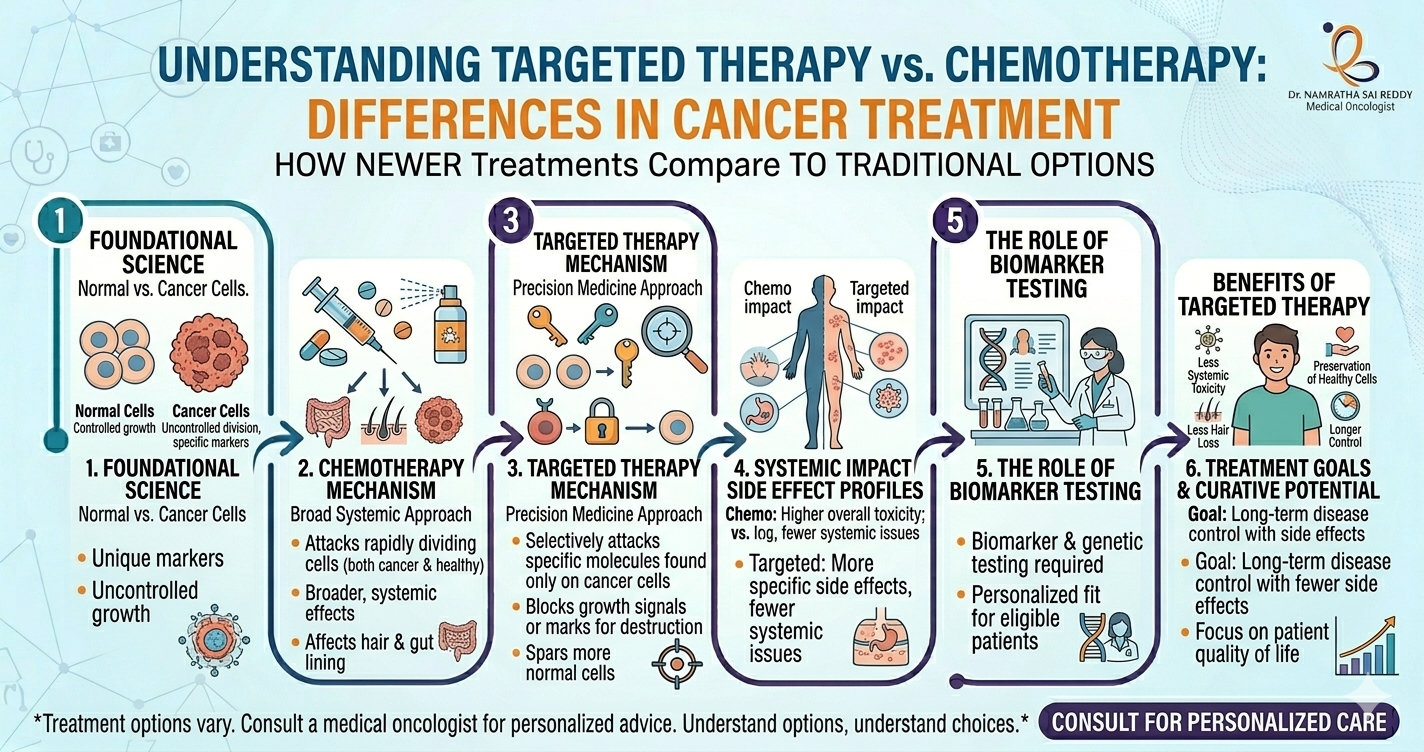
The difference between targeted therapy vs chemotherapy lies mainly in precision and mechanism of action. Chemotherapy works by destroying rapidly dividing cells throughout the body, which includes cancer cells but also healthy cells such as hair follicles and cells in the digestive tract.
In contrast, targeted therapy vs chemotherapy involves drugs designed to attack specific molecular abnormalities found in cancer cells.
Key differences in targeted therapy vs chemotherapy
Chemotherapy
- Affects all rapidly dividing cells
- Often causes hair loss, nausea, and fatigue
- Does not require genetic testing
Targeted therapy
- Attacks specific cancer-related molecules
- Requires biomarker or genetic testing
- Often produces different and sometimes fewer systemic side effects
Studies in patients with metastatic renal cell carcinoma have shown that targeted treatments improved survival rates compared with non-targeted therapies, with higher survival percentages at 1-, 2-, and 3-year follow-ups.
Targeted Therapy vs Immunotherapy: How Are They Different?
The difference between targeted therapy vs immunotherapy lies in how the treatments fight cancer. Targeted therapy directly blocks molecules that cancer cells need to grow, while immunotherapy works by stimulating the immune system to recognise and destroy cancer cells.
Both therapies are considered forms of precision medicine, but they operate through different biological mechanisms.
Understanding targeted therapy vs immunotherapy
Targeted therapy
- Blocks specific cancer-driving proteins or genetic mutations
- Directly interferes with cancer cell growth pathways
Immunotherapy
- Activates immune cells to recognise cancer cells
- Helps the immune system attack tumours more effectively
Research suggests that combining targeted therapy with immunotherapy may further improve survival outcomes in certain cancers, such as liver cancer.
What Are the Possible Targeted Therapy Side Effects?
Although targeted therapy is designed to be more precise, patients can still experience targeted therapy side effects because some targeted pathways also exist in normal cells.
These side effects vary depending on the drug and the biological pathway being targeted.
Common targeted therapy side effects
- Skin rash or dryness
- Diarrhea
- Fatigue
- High blood pressure
- Mouth sores
- Changes in liver function tests
- Nail or hair changes
Studies evaluating targeted drugs in certain cancers have shown that while side effects may occur more frequently than with a placebo, they are generally manageable with proper monitoring and supportive care.
What Is the Targeted Therapy Success Rate?
The targeted therapy success rate depends on several factors, including cancer type, genetic mutation, stage of disease, and patient health. In cancers with identifiable molecular drivers, targeted treatments have significantly improved survival outcomes.
For example, research in advanced non-small cell lung cancer showed that patients receiving targeted therapy had a median overall survival of about 45 months compared with 17 months for chemotherapy alone, demonstrating a substantial improvement.
Factors influencing the targeted therapy success rate
- Type of cancer
- Presence of a targetable genetic mutation
- Stage of the disease
- Response to treatment
- Combination with other therapies
These results highlight how targeted therapy for cancer can dramatically improve treatment outcomes when the correct molecular target is identified.
When Do Doctors Recommend Targeted Therapy?
Doctors recommend targeted therapy for cancer when genetic or biomarker testing reveals specific molecular targets that can be treated with targeted drugs. This approach is an important part of precision oncology.
Situations where targeted therapy may be recommended
- Cancers with identifiable genetic mutations
- Tumours resistant to conventional chemotherapy
- Advanced or metastatic cancers
- Personalised treatment plans based on genomic testing
- Combination therapy with chemotherapy or immunotherapy
With advances in genomic sequencing and biomarker testing, doctors can increasingly tailor treatment strategies to the individual characteristics of each patient’s cancer.
Why Is Targeted Therapy Considered a Breakthrough in Cancer Treatment?
Targeted therapy is considered a breakthrough because it shifts cancer treatment from a generalised approach to a personalised one. Instead of broadly destroying cells, the therapy focuses on the molecular drivers responsible for tumour growth.
Reasons targeted therapy for cancer is revolutionary
- Personalised treatment based on tumour genetics
- Greater precision in attacking cancer cells
- Improved survival outcomes in several cancers
- Potential for fewer systemic side effects
- Ability to combine with other advanced therapies
With ongoing research and development, new targeted drugs continue to expand treatment possibilities for patients with previously difficult-to-treat cancers.
Moving Toward Personalised Cancer Care
Understanding what is targeted therapy in cancer, the differences between targeted therapy vs chemotherapy, and the role of targeted therapy vs immunotherapy helps patients better navigate modern cancer care.
As research continues to uncover new molecular targets, targeted therapy is expected to play an even larger role in oncology. This approach represents one of the most important steps toward precision medicine—delivering treatments that are tailored to the unique biology of each patient’s cancer.
FAQs
1. What is targeted therapy in cancer?
Targeted therapy is a cancer treatment that attacks specific genes, proteins, or molecular pathways that allow cancer cells to grow.
2. How is targeted therapy different from chemotherapy?
In targeted therapy vs chemotherapy, targeted therapy focuses on specific cancer cell mechanisms, while chemotherapy attacks all rapidly dividing cells.
3. Is targeted therapy used for all cancers?
No. Targeted therapy for cancer works best when the tumour contains specific genetic mutations or molecular targets.
4. What are common targeted therapy side effects?
Common targeted therapy side effects include fatigue, skin rash, diarrhea, and high blood pressure.
5. What is the targeted therapy success rate?
The targeted therapy success rate depends on cancer type, mutation profile, and stage of disease.
6. How is targeted therapy administered?
Targeted therapy may be given as oral medications, injections, or intravenous infusions.
7. Can targeted therapy be combined with other treatments?
Yes. Doctors may combine targeted therapy for cancer with chemotherapy, radiation therapy, or immunotherapy.
8. How do doctors determine if targeted therapy will work?
Doctors perform genetic or biomarker testing to determine whether the tumour contains the target that the therapy can attack.
9. Is targeted therapy safer than chemotherapy?
In targeted therapy vs chemotherapy, targeted therapy may cause fewer systemic side effects but still requires careful monitoring.
10. What is the difference between targeted therapy and immunotherapy?
In targeted therapy vs immunotherapy, targeted therapy blocks cancer cell pathways directly, while immunotherapy activates the immune system to fight cancer.