

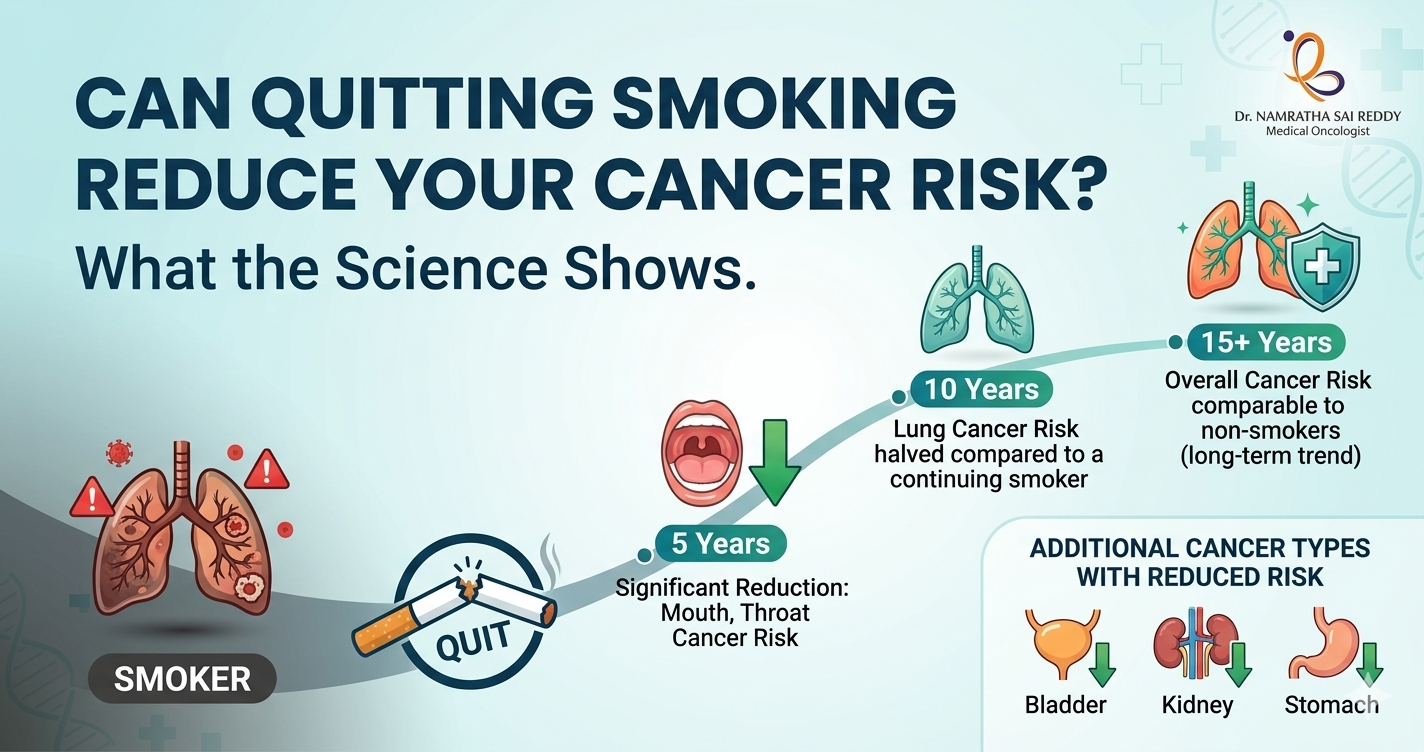
Yes, quitting smoking significantly reduces cancer risk at any age. People who quit completely have a 17% lower overall cancer risk than those who continue smoking. Lung cancer risk alone drops by up to 57% for those who quit before age 50, and by 39% for those who quit after 50. Benefits begin within months and compound the longer you stay smoke-free.
Key Takeaways
- Quitting smoking at any age lowers cancer risk, with research showing a 17% reduction in overall cancer risk among people who stop smoking compared with those who continue.
- Lung cancer risk drops the fastest after quitting, falling by about 39% within five years compared with current smokers.
- Stopping earlier provides the greatest protection, but quitting after age 50 still significantly reduces the risk of lung cancer and other cancers.
- The body begins recovering almost immediately, with improvements in heart rate, oxygen levels, lung function, and circulation within weeks to months.
- Former smokers may still benefit from regular screening, since lung cancer risk can remain elevated for years after quitting, especially in heavy smokers.
Smoking remains one of the leading causes of preventable cancer worldwide. While the dangers of tobacco are well known, many smokers believe that once the damage is done, quitting may not make much difference.
Research shows the opposite: quitting smoking at any age significantly reduces cancer risk. The body begins to recover sooner than many people expect, and the most dramatic improvements appear in lung cancer risk.
The Link Between Smoking and Cancer
Smoking exposes every cell in your body to a barrage of harmful chemicals. According to the American Cancer Society, tobacco smoke contains more than 7,000 chemicals, including at least 70 known carcinogens. These compounds damage DNA, trigger chronic inflammation, and impair the body’s natural ability to repair cells.
Tobacco use is strongly associated with multiple cancers, including:
• Lung cancer
• Liver cancer
• Colorectal cancer
• Stomach cancer
• Bladder cancer
• Pancreatic cancer
What Research Says About Quitting Smoking
A landmark study published in JAMA Network Open analysed health data from nearly 3 million adults over age 30, with an average follow-up period of 13 years. Researchers found that people who quit smoking completely had a 17% lower overall cancer risk compared with those who continued to smoke.
The risk reduction varied across different types of cancer:
• 42% lower risk of lung cancer
• 27% lower risk of liver cancer
• 20% lower risk of colorectal cancer
• 14% lower risk of stomach cancer
Among these, lung cancer risk showed the fastest decline after quitting.
Lung Cancer Risk Drops Faster Than Many Expect
A long-term analysis from the Framingham Heart Study examined nearly 9,000 participants over a period of 25 to 34 years. The study revealed several important findings:
• Nearly 93% of lung cancer cases occurred in heavy smokers.
• Within five years of quitting, the risk of lung cancer dropped by about 39% compared with current smokers.
• The risk continued to decline the longer someone remained smoke-free.
A complementary 2024 study in the Journal of the National Cancer Institute, which tracked over 24,600 Finnish male smokers from 1985 to 2012, confirmed that even simply reducing cigarettes per day lowers lung cancer risk, though completely quitting remains the most effective strategy.
However, researchers at CA: A Cancer Journal for Clinicians note that even decades after quitting, former heavy smokers (20+ pack-years) may retain a meaningfully elevated lung cancer risk compared with lifelong non-smokers, underscoring the importance of continued screening.
Does Age Matter When You Quit?
While quitting at any age offers real benefits, the earlier you stop, the greater the protection. Research reported by Medical News Today and drawn from the JAMA Network Open study shows:
- Quit before age 50: lung cancer risk falls by roughly 57% vs. continued smokers.
- Quit after age 50: lung cancer risk still falls by around 39% vs. continued smokers.
- Johns Hopkins Medicine notes that quitting before age 40 reduces premature death risk from a smoking-related disease by up to 90%, and quitting by age 54 still reduces it by two-thirds.
The message is clear: it is never too late to quit. Every smoke-free year translates into a measurable reduction in cancer risk.
Why Cancer Risk May Appear Higher Shortly After Quitting
Some studies have observed a temporary increase in cancer diagnoses within the first few years after quitting. This can seem confusing, but researchers believe it is largely due to what is known as the “sick quitter effect”.
In some cases, individuals stop smoking because they are already experiencing early symptoms of illness. As a result, diagnoses may occur shortly after quitting, making it appear as though risk has increased. When researchers account for this factor, the overall trend shows a steady decline in cancer risk following smoking cessation.
Health Improvements Begin Quickly After Quitting
The body begins repairing itself almost immediately. Here is what research, including findings summarised by the American Cancer Society, shows about the recovery trajectory:
- 20 minutes
Heart rate begins to return to normal levels.
- 24 hours
Carbon monoxide levels in the blood drop significantly, improving oxygen delivery to cells.
- A few months
Lung function and circulation improve noticeably. Respiratory symptoms like coughing and shortness of breath diminish.
- ~5 years
Lung cancer risk drops by approximately 39% compared with current smokers (Framingham Heart Study). The risk of several other cancers also begins to fall.
- 10+ years
Overall cancer risk approaches, though may not fully equal that of lifelong non-smokers, particularly for heavy former smokers.
Screening Remains Important for Former Smokers
A systematic review published in CA: A Cancer Journal for Clinicians (2023) found that lung cancer risk may remain meaningfully elevated for two to three decades in former heavy smokers, even beyond the 15-year cut-off that currently defines US screening eligibility. The authors argue that age-based screening criteria may be more appropriate than time-since-quitting criteria.
Current US Preventive Services Task Force guidelines recommend annual low-dose CT lung cancer screening for adults aged 50 to 80 who have a 20-pack-year smoking history and currently smoke or have quit within the past 15 years. Former heavy smokers should speak with their doctor about continued eligibility.
It Is Never Too Late to Quit
The evidence is clear. Quitting smoking dramatically reduces cancer risk, and the benefits begin much sooner than most people realise. Even for long-term smokers, stopping today can lead to measurable health improvements within just a few years.
While former smokers may still benefit from cancer screening and medical follow-up, the long-term advantages of quitting far outweigh the risks of continuing. Every smoke-free year helps your body heal and lowers your chances of developing cancer.
FAQs
How soon does cancer risk drop after quitting?
Cancer risk begins to decline within a few years, with lung cancer risk dropping significantly within about five years.
Is it worth quitting after age 50?
Yes. Quitting after 50 can still reduce lung cancer risk by around 40%.
Does lung cancer risk ever become normal again?
Risk declines substantially but may remain higher than that of people who never smoked.
Which cancers are linked to smoking?
Smoking is associated with lung, liver, colorectal, stomach, bladder, and pancreatic cancers.
Why do some cancers appear soon after quitting?
Some people quit because of early symptoms, which can lead to a diagnosis shortly after stopping.
Should former smokers get screened for lung cancer?
Yes, especially those with a long smoking history.
What is the biggest health benefit of quitting?
Lower risk of cancer, heart disease, stroke, and improved overall life expectancy.